What Is Model Government?
Students run the government.
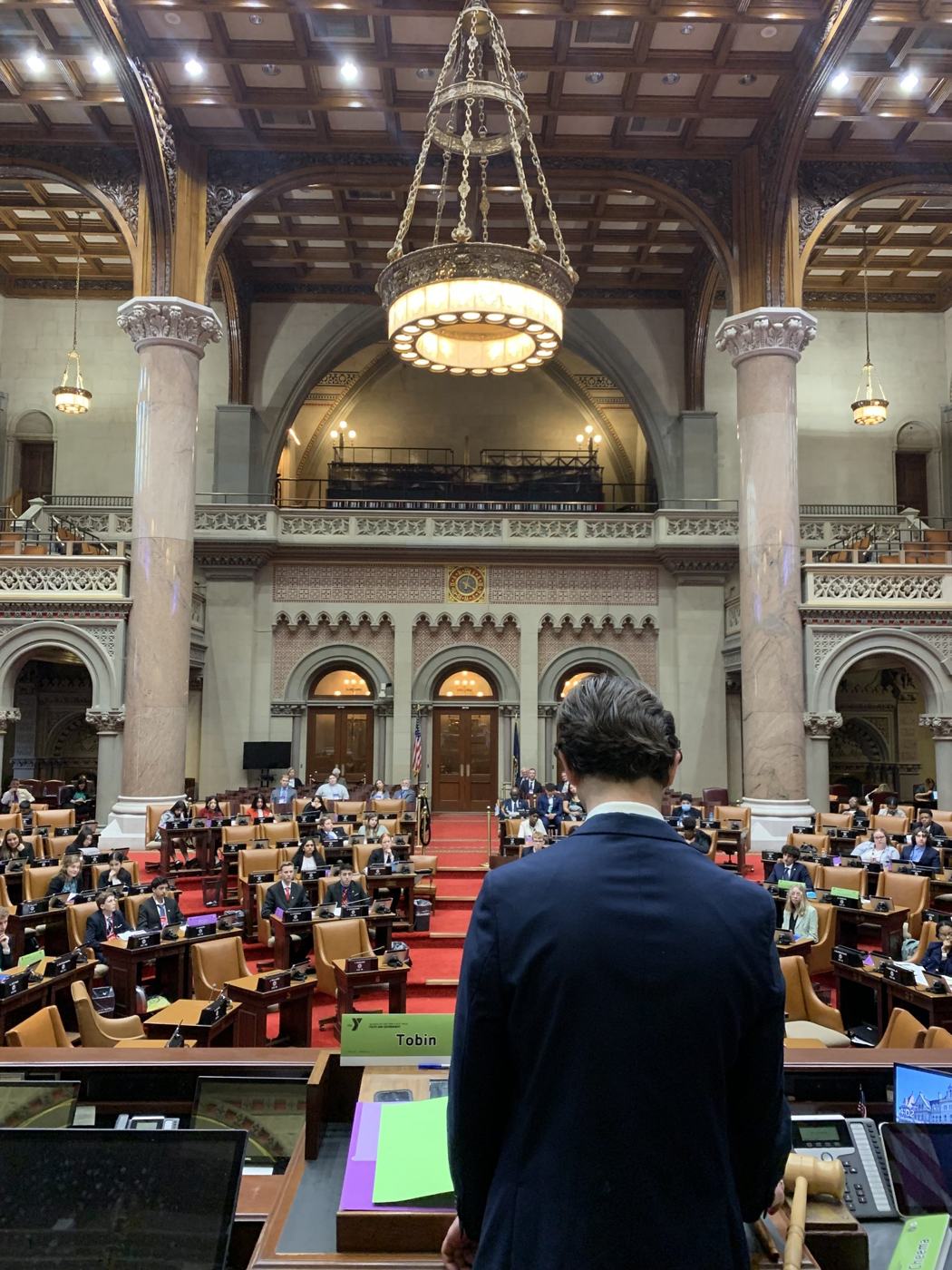
In model government, students write real bills, debate them, vote and lead. In Youth and Government, they do it in the real State Capitol.
In three steps
How a student bill becomes law
- Write a bill. Each student or team picks an issue they care about and writes a proposed law.
- Debate it. Committees question authors, amend bills and decide which ones reach the full chamber, where everyone debates and votes.
- Sign or veto. The student Youth Governor signs or vetoes every bill that passes.
Students can also serve as justices and attorneys, on the Governor's Cabinet, or in the Press Corps. See every role.
How it compares
Youth and Government and other programs
Many students do more than one. Here is how they differ.
Scroll sideways to see the whole table.
| Program | What students do | Where it happens |
|---|---|---|
| Youth and Government | Students run a model state government with peers from other schools: legislature, courts, cabinet and press. | The State Capitol |
| Model United Nations | Students represent countries and debate world issues in a simulated United Nations. | Usually a school or college campus |
| Debate and speech | Students compete in structured arguments and speeches, judged round by round. | Schools and tournaments |
| Student government | Students are elected to lead and serve their own school. | Your school |
Why it works
Learn government by running it.
- Students debate ideas, not people, and work with classmates they disagree with.
- It is nonpartisan and open to all. The Y does not promote any party, candidate or agenda.
- It has run since December 1936, when it started in Albany.
Words to know
New to the terms?
Delegation, Intent Form, Bill Book and more, in plain language.