
The skills state tests reward, practiced for real.
Close reading and argument from evidence. Here is how Youth and Government lines up with the tests in New York, Connecticut and Rhode Island.
The short version
Two subjects, one project
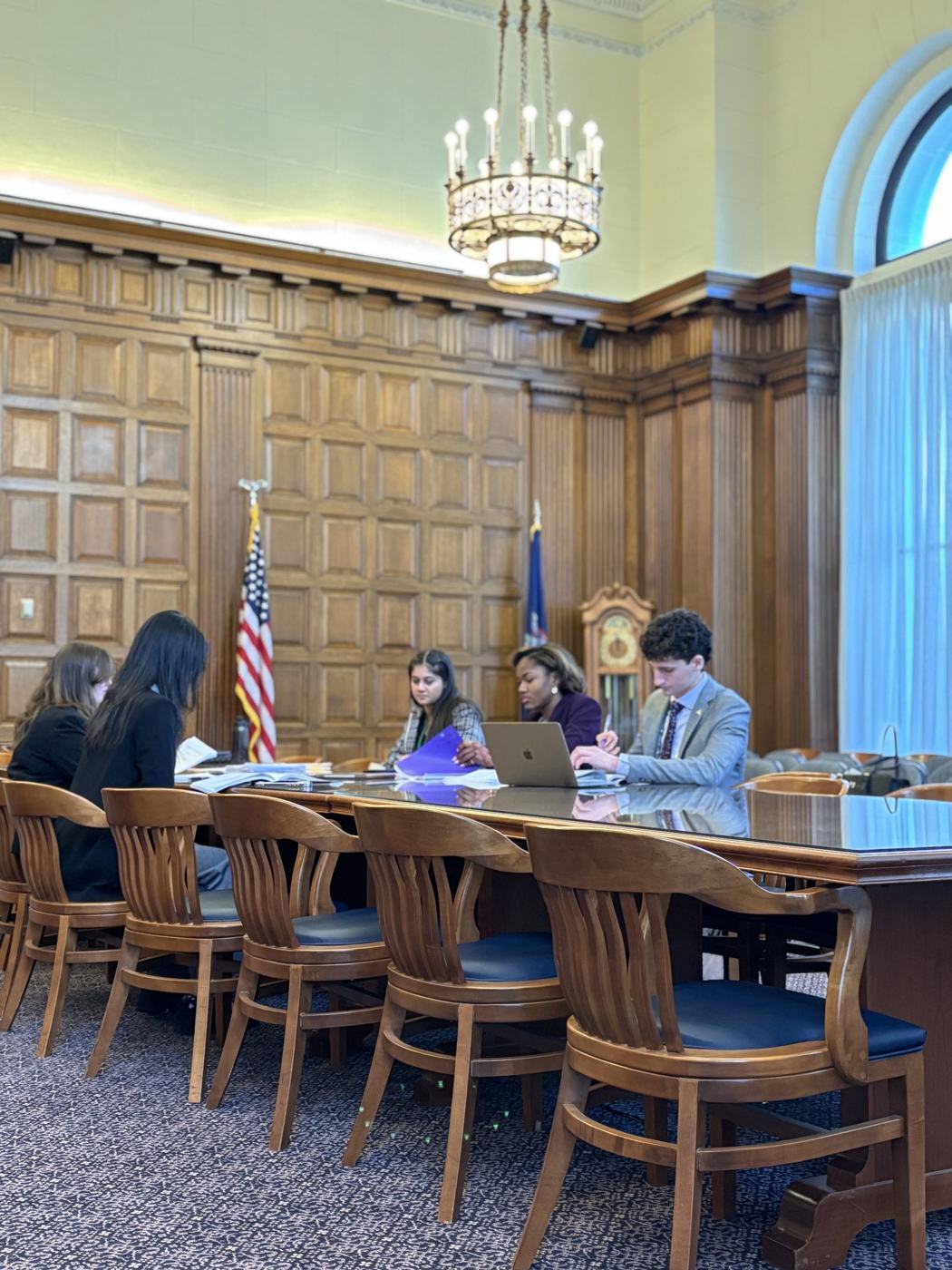
State reading and writing tests reward two skills above all: reading closely and citing evidence, and arguing a position from sources. Youth and Government students do both every time they research an issue, write a bill or argue a case, and they practice listening to and judging an argument in every debate.
- Nothing extra to teach. The research, the bill, the debate and the position paper already happen. This page just names the skills so you can show your principal.
- Builds skills for the reading and writing tests students already take.
- Fits social studies and English at the same time, so one lesson can meet standards in both.
Where the skills show up
What students do, and the test skill it practices
| What students do | The skill it builds | The test style it practices |
|---|---|---|
| Researching an issue and reading a bill | Close reading; citing evidence from a text | Evidence questions and two-part questions (answer, then the proof) |
| Writing a bill or position paper | Argument writing from sources | Source-based argument essays and short constructed responses |
| Committee hearing and floor debate | Judging a speaker's reasoning and evidence | Questions that ask how well evidence supports a claim; listening items on some tests, such as Connecticut's |
| Hearing the other side and rebuttal | Point of view; counterclaims | Point-of-view questions; essays that answer a counterclaim |
| Judicial brief and oral argument | Argument with precedent and evidence | Document-based and source-based essays |
| Press Corps article | Informational writing; summary | Summary and central-idea questions |
| Core value speech or reflection | Theme and central idea | Theme and text-analysis responses |
Younger grades: kindergarten to grade 2 have no state test in New York, Connecticut or Rhode Island. Retelling a story, taking turns in a class vote and saying “I think ___ because ___” build the habits the grade 3 test looks for.
Your state
The tests in each state
Open a state to see its reading and writing tests, high school tests, civics requirements and civics seal.
New York
Reading and writing tests, elementary and middle school
The New York State English (ELA) test in grades 3 to 8: multiple choice, short written answers that back up an idea with evidence and, in grades 4 to 8, a longer essay built on two paired texts. Speaking and listening are not tested.
High school
The English Regents exam: multiple choice, an argument essay written from several sources, and an essay that analyzes a text.
Civics and social studies
Regents exams in United States History and Government (with a Civic Literacy document-based essay on a constitutional or civic issue) and Global History and Geography II (an Enduring Issues essay from documents). No grade 3 to 8 social studies test. New York is changing its graduation measures: current 9th to 11th graders are expected to graduate without having to pass Regents exams, with regulations expected in 2027.
Civics seal
The Seal of Civic Readiness (6 points). Extracurricular civic work of 40 or more hours with an essay or presentation earns points and can be repeated; Youth and Government can fit here. How Youth and Government counts toward it.
Check the source: NYSED U.S. History and Government Regents test design (opens in a new tab) · NYSED grades 3 to 8 ELA educator guide (opens in a new tab) · NYSED Seal of Civic Readiness criteria (opens in a new tab)
Connecticut
Reading and writing tests, elementary and middle school
Smarter Balanced, Connecticut's state test, in grades 3 to 8: reading, writing, listening and research, with short written answers and listening clips.
High school
The SAT School Day in grade 11.
Civics and social studies
No statewide social studies test. Civics is required to graduate; your district sets how much.
Civics seal
The Connecticut State Seal of Civics Education and Engagement, which districts can opt into starting in 2026-27. How Youth and Government counts toward it.
Check the source: CSDE Smarter Balanced ELA overview (opens in a new tab) · CSDE Connecticut SAT School Day (opens in a new tab)
Rhode Island
Reading and writing tests, elementary and middle school
RICAS, Rhode Island's state test, in grades 3 to 8: multiple choice, two-part questions (answer, then proof), short written answers in grades 3 and 4, and essays based on what students read. Some essays ask students to write a story.
High school
The PSAT 10 in grade 10 and the SAT in grade 11.
Civics and social studies
No statewide social studies test. Under the Civic Literacy Act, districts provide at least one student-led civics project in middle or high school, and students show civics proficiency, defined by the district.
Civics seal
No state civics seal yet.
Check the source: RIDE RICAS ELA test design (opens in a new tab) · RIDE PSAT 10 and SAT (opens in a new tab)
Be straight with your principal
What this is and is not
- It is practice in a format students will recognize, not a test-prep program, and it does not predict scores.
- Standards and test links are our reading of public state documents. Your district decides what counts.
- We never copy state test passages or questions.
- Tests change often. This page is a snapshot from October 2026; check your state's Department of Education site before quoting a detail.
Try it this week
Pick any lesson, and at the end have students write one paragraph that takes a side and quotes one line of evidence. That single paragraph is a core move on most state reading and writing tests.
Questions about a lesson or your district? Book a call.